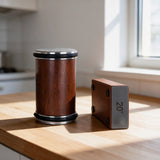
Get a razor edge in minutes.
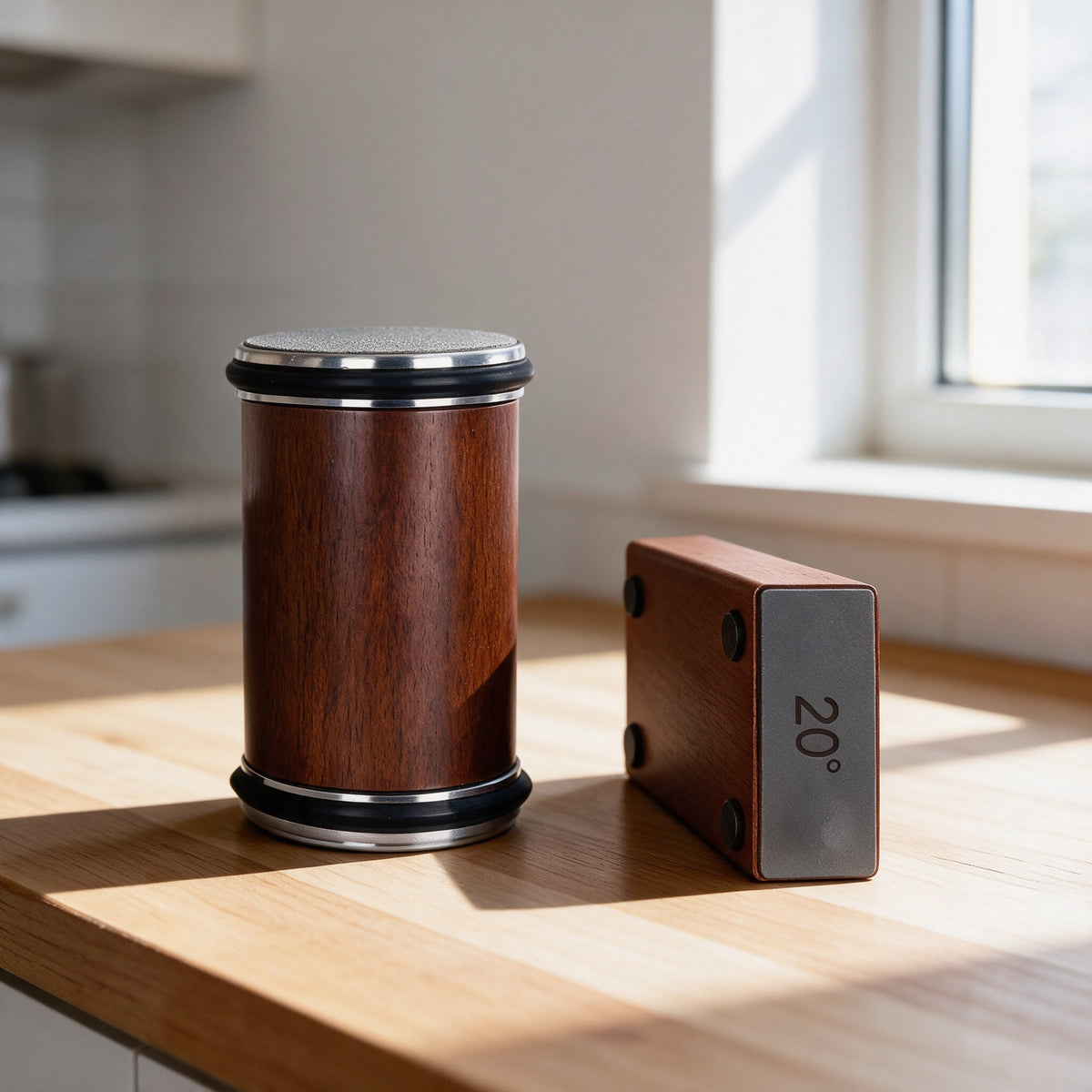
A magnet holds 15° or 20° for you. You just roll: a whetstone edge, no skill needed.
- Free US delivery
- 30-day money back
- Lifetime warranty option
- Holds 15° or 20° for you
- Quick touch-ups once it's sharp
- 400 grit + 3000 grit discs, both included
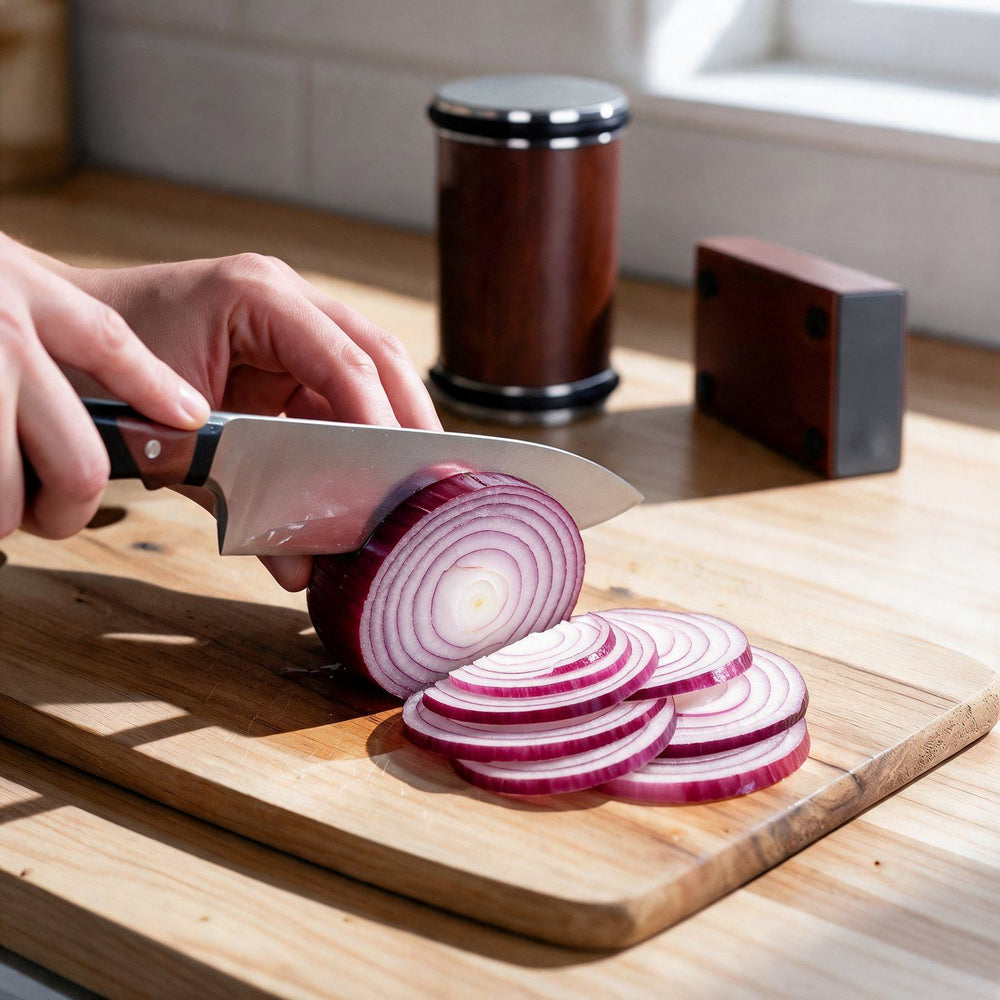
Sharp knives shouldn’t take skill.
Sharpening comes down to one thing: holding the same angle on every stroke. Hands can’t do that reliably. A magnet can.
- The block holds 15° or 20° — you never aim anything
- Both grits included: 400 grit diamond on one end of the roller, 3000 grit ceramic on the other
- Runs dry, and touch-ups take a few minutes
- 30 days, money back — nothing to send back
Most ways of sharpening fight you.
Pull-through
Drags the edge through fixed slots and scrapes steel away. Quick, but rough on a good knife.
Whetstone
Excellent — if your hands hold the same angle for every stroke. Most can’t, and a wandering angle never comes to a point.
Honing steel
Straightens an edge that has rolled over. It doesn’t sharpen one that has gone dull.
The fix: take the angle out of your hands. The block holds it; you only roll.
Roll, flip, finish.
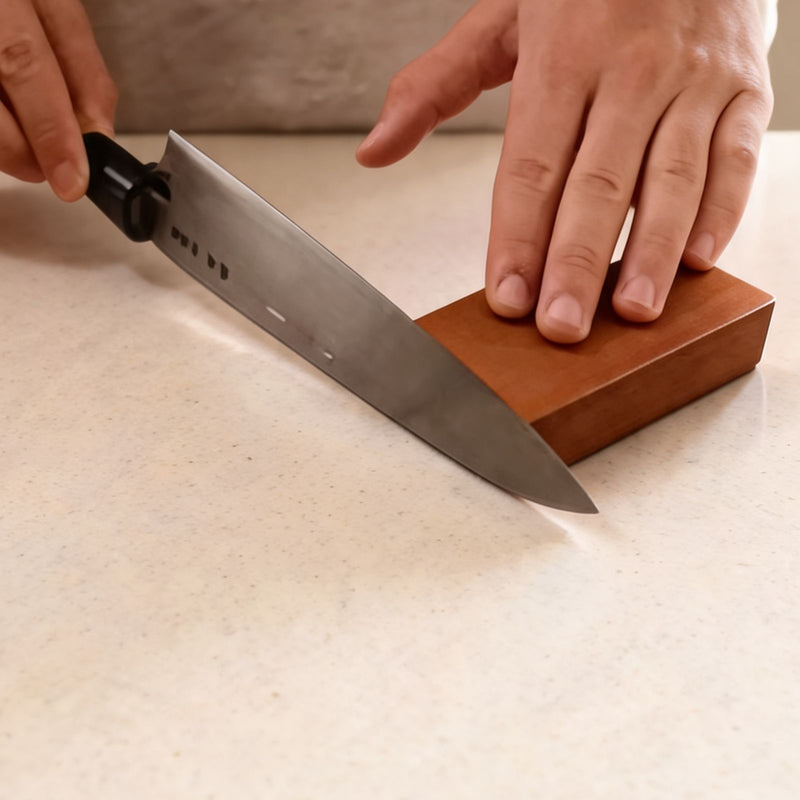
Set the blade
Lay it flat on the block. The magnet holds the angle.
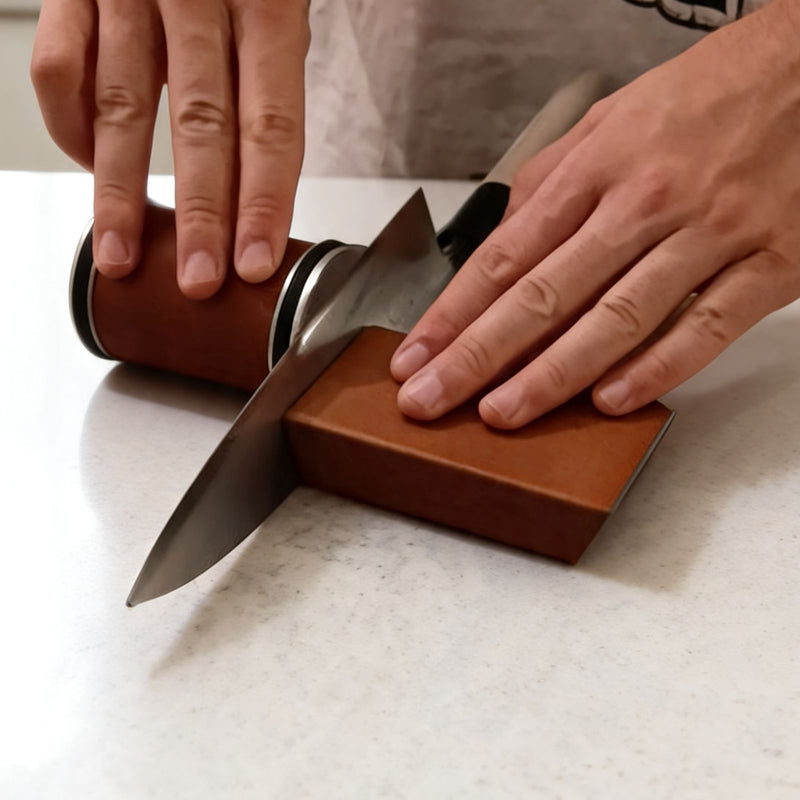
Roll
Roll heel to tip, light pressure.
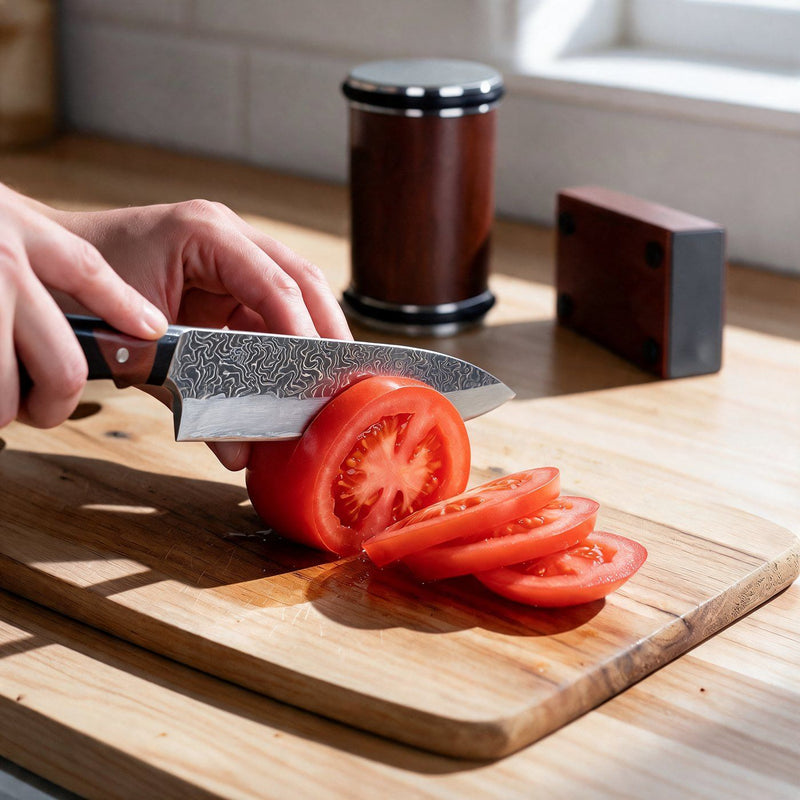
Flip, finish, test
Flip the blade, finish on 3000, test on a tomato.
How it compares.
The same held-angle idea whetstone users rely on, without the years of practice.
| Feature | Rollkeen | Pull-through | Whetstone |
|---|---|---|---|
| Skill needed | None | None | A lot |
| Same angle every stroke | |||
| Gentle on a good edge | |||
| Polishes to a fine edge | |||
| Water or soaking | None | None | Usually |
| A touch-up, once sharp | A few min | ~1 min | Needs practice |
Typical use of each method; times vary with the knife and how dull it is.
What is a rolling knife sharpener?
A two-part sharpener. A magnetic block holds the knife at a fixed angle, and a roller with a disc on each end runs along the edge. Because the block sets the angle and not your hands, you get the even bevel a whetstone gives — without learning to hold one.
How is it different from a pull-through sharpener?
A pull-through drags the edge through fixed slots and scrapes steel away, which is quick but rough on a good edge. Here the disc turns as you roll, taking metal off evenly along the whole edge at the angle the block sets.
Do I still need a whetstone?
Not for kitchen knives. A whetstone gives the same result — a clean edge at a set angle — but only if your hands hold that angle stroke after stroke. The block does that part for you.
Which angle should I use — 15° or 20°?
20° if you do not know: it suits German and most Western knives. 15° for Japanese knives and anything ground thin. Pick one per knife and stay on it — switching means cutting a new bevel.
Will it damage an expensive knife?
The block is the protection: it removes the wrong-angle stroke that ruins good knives. Two cautions — start on 3000 grit if the knife is only tired, and know that going from 20° to 15° is a reprofile, not a touch-up.
Does it sharpen the tip?
Yes. The very tip sits just past the end of the magnet, so give it a little help: over the last inch, lift the handle slightly and make two or three extra passes. That brings the tip right in.
Free US shipping · 30-day money back